
Experience the heart of Ethiopian hospitality through the traditional coffee ceremony. Learn about its history, symbolism, and how to participate in this beautiful cultural tradition.
The Birthplace of Coffee
Ethiopia is the birthplace of coffee, and the traditional coffee ceremony is the nation's most cherished social ritual. According to legend, a goatherd named Kaldi discovered coffee when his goats became unusually energetic after eating berries from a certain tree. Today, coffee is deeply woven into the fabric of Ethiopian daily life.
The Ceremony Explained
The coffee ceremony is a three-round affair that can last 2-3 hours. It's not about caffeine—it's about connection, conversation, and community.
Setting the Scene
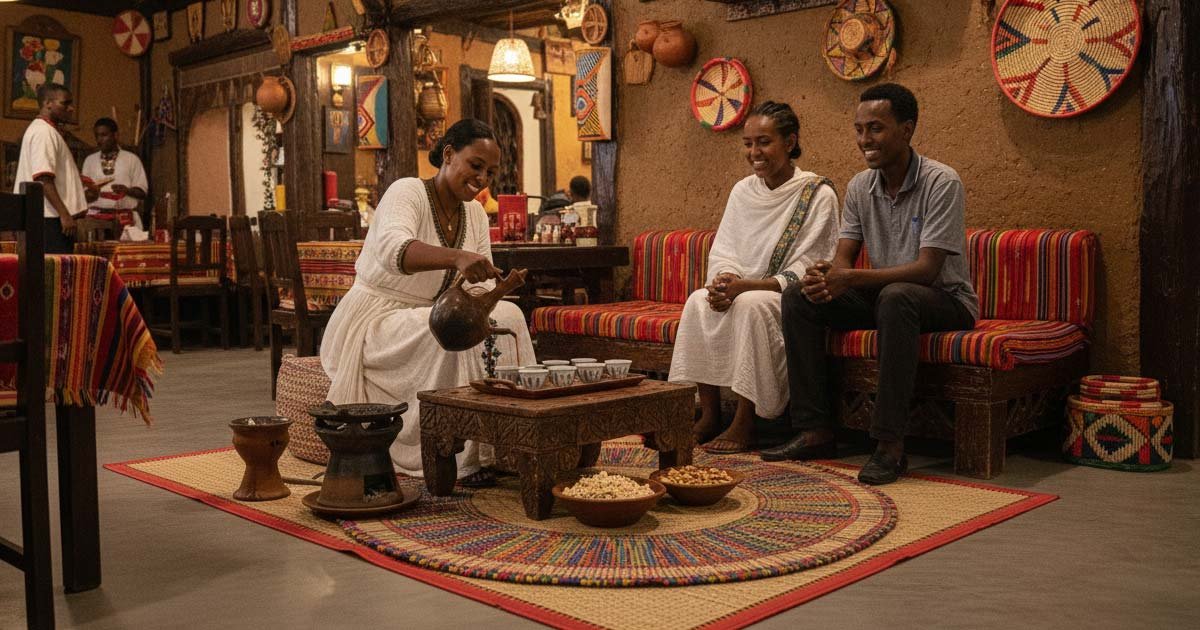
The ceremony typically takes place on a bed of fresh grass and flowers, symbolizing abundance and connection to the land. Frankincense burns in a clay pot, filling the air with its distinctive aroma.
The Process
1. Roasting: Green coffee beans are roasted in a flat pan over charcoal. The host will wave the smoking pan toward guests so they can appreciate the aroma.2. Grinding: The roasted beans are ground by hand using a mortar and pestle (mukecha and zenezena).3. Brewing: The ground coffee is added to a jebena (clay coffee pot) with water and brought to a boil multiple times.4. Serving: Coffee is poured from a height into small handleless cups called sini, creating a signature frothy top.
The Three Rounds
Each round has a name and significance:Abol: The first and strongest round, setting the tone for the gatheringTona (or Huletegna): The second round, made from the same groundsBaraka: The third and final round, believed to bring blessings to those who stay
Leaving before the third round is considered impolite—you'll miss the blessing!
Accompaniments
Coffee is often served with:Popcorn: The most common accompanimentKolo: Roasted barley and peanutsDabo: Fresh breadSugar: Added to taste (cream is not traditionally used)
The Social Aspect
The coffee ceremony is as much about conversation as it is about coffee. Topics range from daily gossip to serious family matters. It's a time when:Neighbors catch upBusiness deals are discussedDisputes are resolvedFriendships are strengthened
Where to Experience It
In Homes
The most authentic experience is in an Ethiopian home. If invited, accept—it's a great honor.
In Restaurants
Many traditional restaurants in Addis Ababa perform the ceremony daily: Yod Abyssinia2000 Habesha Cultural Restaurant Kategna
Cultural Centers
The Ethnological Museum at Addis Ababa University offers educational demonstrations.
Tips for Participation
1. Be patient: The ceremony cannot be rushed2. Accept graciously: It's polite to drink at least one cup3. Engage in conversation: This is the whole point4. Compliment the coffee: Your host will appreciate it5. Stay for all three rounds: Especially if you're a guest of honor
Conclusion
The Ethiopian coffee ceremony is a window into the soul of Ethiopian culture—hospitable, communal, and unhurried. In a world of instant gratification, it's a beautiful reminder to slow down and savor the moment.
0 Comments